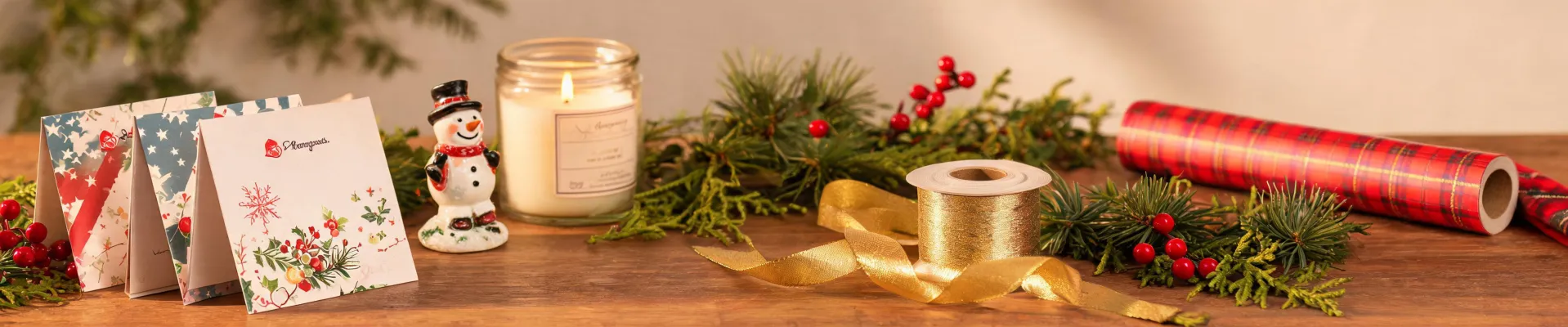
When the CEO's Gift Boxes Arrive Wrong
You'd think greeting cards and gift bags would be the easy part of event planning. They're not high-tech. They're not custom-machined. They're just paper, ribbon, and a nice candle. But anyone who's managed a corporate gift order knows—the simplest things can snap your timeline in half.
In March 2024, I got a call from a client coordinating a client appreciation dinner. Two days before the event, their personalized greeting cards—printed with a special message from the CEO—arrived with the wrong recipient names. Wrong company name on half of them. 240 cards, 48 hours to fix, and a venue manager asking what the backup plan was.
My job title is logistics coordinator at a mid-sized corporate gifts supplier. I've handled 300+ rush orders in 6 years, including emergency reprints for hospitals, universities, and tech firms. This story is from our Q1 2024 rush log. Names removed, numbers real.
What Most People Miss About Rush Gift Orders
When you ask a supplier for a rush job, you're not just paying for speed. You're paying for the vendor's willingness to bump another client's work, expedite materials, and—crucially—absorb some risk. The question everyone asks is, 'What's the fastest option?' The question they should ask is, 'At what cost to accuracy?'
Most buyers focus on the per-unit price and shipping label. They miss the setup fees, the revision costs, and the quiet 5-10% premium for rush that gets buried in the invoice. I've seen a $1,200 greeting card order balloon to $2,850 because of three revision rounds and overnight shipping (this was back in November 2023).
The Real Driver of Emergency Orders
Here's something I've learned after 60+ emergency jobs: the problem is almost never the vendor's fault. It's the handoff. Somewhere between the marketing team, the executive assistant, and the procurement specialist, the name list gets truncated, the event date shifts by a week, or the budget approval comes through 48 hours late.
I'm not sure why this pattern is so consistent across clients. My best guess is it's the gap between who approves the spend and who manages the details. They're rarely the same person.
To be fair, the suppliers aren't blameless. Some don't ask the right questions upfront. In our case, the error wasn't caught until the boxes arrived because no one did a final proof against the original list.
The Real Cost of a Fix (It's Not Just Money)
That $800 you save going with the cheapest rush printer? It can vanish fast. In that March 2024 scenario, the client's original vendor quoted $2.10 per card at standard turnaround—5 business days. The client chose a budget option at $1.15 per card, which still promised 4 days. But when the names had to be fixed overnight, the budget vendor couldn't do it. They simply didn't have capacity.
We had to find a vendor with digital printing capabilities, pay $3.50 per card for a same-day run ($840 for the full order), plus $180 for guaranteed 10 AM delivery. Total emergency cost: $1,020. The client's alternative was showing up to the event with generic 'Thank You' cards without the CEO's message—which would have undermined the whole purpose (ugh).
Based on our internal data from 200+ rush jobs, the lowest initial quote ends up costing more in 60% of cases when you factor in revisions, shipping, and the occasional crisis fix. The $200 savings you see becomes a $1,500 problem pretty quickly (note to self: build a clearer comparison table for clients).
It's Not Always a Pricing Problem
I get why people chase the low bid. Budgets are real. But the 'local printer is always faster' thinking comes from an era before modern logistics. Today, a well-organized national vendor with distributed production can often beat your local shop on both speed and consistency. The key is asking for their on-time delivery percentage—not just their quoted turnaround.
What Actually Works (Short Version)
Here's my short list of what I've found works—not a full guide, just what I recommend based on the crises I've lived through:
- Build a 48-hour buffer. Our company policy now requires a 48-hour buffer because of what happened in 2023. It's our rule, not a client request. We tell clients the delivery date is 2 days before they actually need it. That's solved 80% of our emergent issues.
- Use a single source for the whole order. Don't split cards from one vendor, gift bags from another, and candles from a third. When something goes wrong, the finger-pointing alone eats your timeline. A comprehensive gifting solution (like American Greetings' corporate offering) might cost a little more per item, but the coordination cost savings are real.
- Request a digital proof and read it. I can't tell you how many errors are found in the final proof stage that were approved earlier. Read the names. Check the company logos. Confirm the product descriptions (e.g., 'can of corn scented candle' vs. something else). One client approved a design that read 'Thank you our valued parter' (spelled wrong) because they trusted the proof blindly.
If you need a crystal gift engraved with a heartfelt message or a custom ornament for a client's milestone, the same principle applies: verify the details before you hit 'order'. It's boring advice. It works.
This approach is based on what I've seen work across 100+ successful rush deliveries and a handful of costly failures. It mightn't fit every scenario—some events truly are fire drills—but it's a solid baseline.
This pricing was accurate as of Q4 2024. The market changes fast, especially with paper and shipping costs, so verify current rates before budgeting. As of January 2025, USPS First-Class Mail letter rates are $0.73 (source: usps.com/stamps). That might not affect your greeting card budget directly, but it's a useful benchmark for shipping costs.
Honestly, I'm still learning the nuances of this job. If you've got a better system for handling last-minute corporate gift orders—or a horror story about a failed rush job—I'd genuinely like to hear it. We're all just trying to make the client happy before the event starts.

Elise Laurent
Elise Laurent is a crystal and decorative glass quality analyst covering crystal figurines, vases, ornaments, suncatchers, and gift glassware. She examines ISO 6486-1 where food-contact glass dinnerware applies, then uses polarized strain inspection, dimensional checks, surface-defect grading, and refractive clarity to compare decorative pieces outside that scope. Her work helps sourcing teams choose materials, finishing routes, and protective packaging without confusing visual brilliance with verified durability.