Cheap Corporate Gifts Are Usually the Most Expensive
I'll just say it: buying corporate gifts based on the lowest unit price is a mistake I made for years, and it cost us thousands. When I first started managing our company's quarterly client appreciation program, I assumed the vendor with the cheapest per-item price was the right choice. That assumption led to budget overruns, rushed reorders, and a lot of stress. The real cost isn't the sticker price—it's the total cost of ownership, and that's where a company like American Greetings often wins, even if their per-unit price looks higher at first glance.
Let me walk you through what I learned, including a specific example with scented candles and crystal ornaments that changed how I evaluate every vendor.
The Trap: Unit Price vs. Total Cost of Ownership
Here's the thing. My initial approach was completely wrong. I thought the lowest per-unit price was the best deal. Three budget overruns later, I learned about total cost of ownership (TCO).
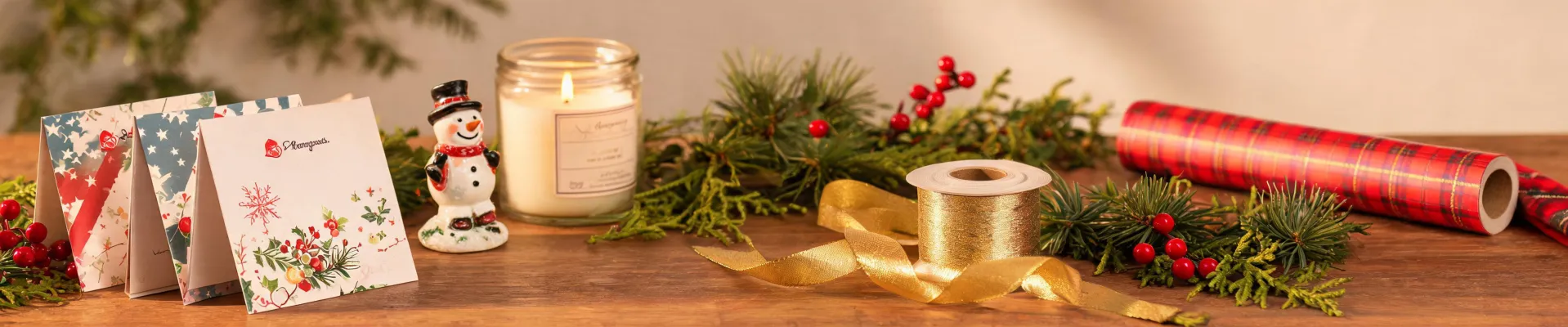
For example, one year I compared costs across 4 vendors for our holiday gift set (a greeting card, a scented candle, and a crystal ornament). Vendor A quoted $18.50 per set, all inclusive. Vendor B quoted $14.00 per set, which looked like a no-brainer. I almost went with B until I calculated the TCO:
- Vendor B's line items: $14.00 per set + $1.50 per set for custom packaging + $0.75 per set for a ribbon (I assumed was included) + $250 flat fee for setup + $180 for shipping. Total per set: about $19.80.
- Vendor A's line item: $18.50 per set, all inclusive, free shipping over $5,000.
Vendor B was actually 7% more expensive when you added everything up. That's a huge difference hidden in fine print.
"The vendor who lists all fees upfront—even if the total looks higher—usually costs less in the end."
And that's just the sticker price. The hidden costs were worse. Vendor B's 'free' design template took three rounds of revisions. Each round cost us time, and with a hard deadline for Christmas delivery, the last round turned into a rush fee.
The Scented Candle Mistake That Cost Us
I have mixed feelings about rush fees. On one hand, they feel like gouging. On the other, I've seen the operational chaos rush orders cause. In 2023, one vendor's 'standard shipping' was actually 'standard processing,' with expedited shipping at an extra $4.50 per unit. We learned this 72 hours before our event. The person who approved that order had to go to their supervisor for a $1,200 unbudgeted expense. Honestly, it was a mess.
Now, every vendor I evaluate gets the same question: "What's NOT included?" If they can't answer that clearly, I move on. American Greetings, for example, is pretty straightforward about their pricing for corporate orders. You can see the per-unit cost, setup fees (if any), and shipping estimates upfront. That saves me time and guesswork.
Why I Prioritize Transparent Vendors Like American Greetings
The numbers said go with the cheap vendor. My gut said to stick with the one that showed me the full picture. I went with my gut. Turns out my gut was right. The 'cheap' option would have resulted in a $1,200 redo when quality failed because they'd used a different wick for the scented candle than the sample.
Every cost analysis points to the lowest quote as the winner. Something feels off when a vendor can't tell you the total cost before you commit. Turns out that 'we'll figure it out later' is a preview of 'we'll charge you for that later.'
I now have a procurement policy that requires quotes from 3 vendors minimum, but with a twist: I use a TCO spreadsheet that includes setup fees, shipping, rush fees, and a buffer for redo risk. According to FTC guidelines (ftc.gov), advertising claims must be truthful and not misleading, but that doesn't always cover the line items a vendor chooses to break out separately. It's on the buyer to ask the right questions. And I've learned to ask 'what's NOT included' before 'what's the price.'
How to Evaluate Corporate Gifts Like a Procurement Manager
Here's my process now, after tracking 180+ orders over 6 years in our procurement system:
- Get a full quote, not a price per unit. Ask for total landed cost to your door.
- Check the sample. A scented candle that smells weak or a crystal ornament with a flawed cut isn't a savings.
- Understand the guarantee. What happens if the American Greetings anniversary card you ordered has a typo in the imprint? Who pays for the redo?
- Calculate the total cost per item AFTER shipping. That $3.50 per unit extra for a better quality item is often worth it when you factor in recipient satisfaction.
Even after choosing a vendor, I keep second-guessing. What if the quality isn't as good as the sample? The two weeks until delivery are stressful. But I've learned that relying on transparent pricing reduces those doubts. It's not just about the money—it's about the certainty.
So, I'll say it again: transparent pricing is more trustworthy than hiding fees and offering a low sticker price. I'd rather pay $18.50 per set and know exactly what I'm getting than save a few bucks and risk a last-minute scramble. Your budget, and your sanity, will thank you.

Elise Laurent
Elise Laurent is a crystal and decorative glass quality analyst covering crystal figurines, vases, ornaments, suncatchers, and gift glassware. She examines ISO 6486-1 where food-contact glass dinnerware applies, then uses polarized strain inspection, dimensional checks, surface-defect grading, and refractive clarity to compare decorative pieces outside that scope. Her work helps sourcing teams choose materials, finishing routes, and protective packaging without confusing visual brilliance with verified durability.