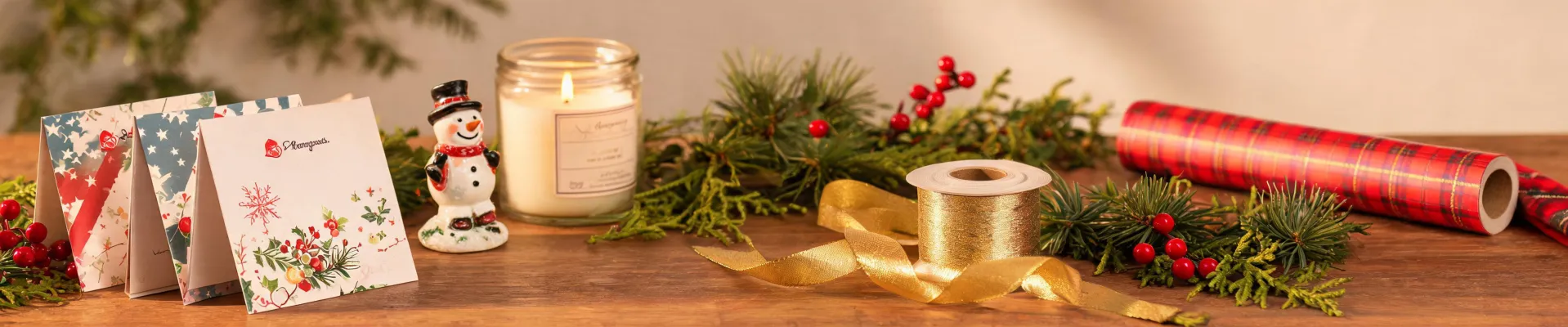
I've been reviewing products for a corporate gifting distributor for about four years now. In that time, I've signed off on orders ranging from a hundred units to fifty thousand. If there's one thing I've unlearned in that time, it's the assumption that order size should determine inspection effort.
The order that proved me wrong
It started with a phone call in April 2024—actually, the second week of April, because I remember the timeline being tight from day one. A boutique real estate agency reached out. Five employees, one office, a growing waitlist of clients. They'd seen our product lines at an American Greetings store and wanted a small batch of client appreciation gifts.
The order was modest: forty plush keychains with their logo embroidered, twenty crystal ornaments with etched dates, and a stack of personalized gift cards to accompany each one. Total value: $214.67.
I remember the number because it was so small that I almost didn't think twice about it.
Why I almost skipped the deep check
When I first started in quality control, I had a mental scale: the bigger the invoice, the more thoroughly I'd inspect. A $20,000 order? I'd verify every unit against our spec sheet, no shortcuts. A $200 order? Maybe five minutes on a sample batch, then a green light. After all, the downside of a defect in a small order seemed small, too.
That logic lasted until this one. Actually, until it almost cost us a client.
The preliminary samples for the agency order came back clean. I checked four of the plush keychains—logo stitching straight, no loose threads, colors matched the Pantone references. The crystal ornaments had the right weight, and the etching was crisp. The personalized gift cards matched the order form: names right, dates right, envelope linings the correct brand color.
Everything said pass. Something said keep looking.
I couldn't pin down what was bothering me. No single measurable defect. Just a nagging feeling that I'd regret signing off without opening more boxes. My workload that week was brutal, and the client's event was four days out, which meant shipping had to happen by Friday. The path of least resistance was to check the box and move on.
I opened every box anyway.
What I found
About fifteen percent of the keychain packages had a subtle production flaw. The cardboard backing behind the plush toy was sliced just off-center, which meant the heat-sealed plastic bubble didn't sit flush. The keychains themselves? Perfectly fine. No loose threads, no stitching errors, no color issues. Nobody would have noticed unless they were deliberately looking for it.
But this client was putting these into layered gift packages—each with a crystal ornament and a personalized card—intending to impress their best clients. Fine wasn't the standard they'd paid for.
The crystal ornaments had a variation too. Two of them carried noticeably lighter etching than the rest. Set side by side with the others, you'd see it immediately. Separated into gift boxes and handed to different people, nobody would ever know.
I asked my coworker to take a look. He studied the pieces for a solid ten seconds and said, "I mean... barely? Maybe you're looking too hard."
Maybe I was. Here's the thing though: I review 200+ unique item types annually, and I've inspected thousands of finished products over four years. When something feels off, even if I can't articulate it in the moment, it's rarely nothing.
The 2-hour decision
We had two paths: ship as-is and trust that nobody would notice, or reject the batch and request a redo. The redo would take three days and push right up against the client's deadline. Shipping meant the client receives inconsistent product—probably without complaint, possibly without even noticing.
I had about two hours to decide, because the vendor's cutoff for rush reorders was 2 PM, and it was already 11:50. Our procurement manager was out sick that day (naturally), so the call was mine alone. In hindsight, I should have asked for a written extension or escalated to our director, but with the timeline, I did the best I could with what I had.
The cost analysis said ship it. The financial exposure was roughly $214.67. The alternative risked straining a vendor relationship and missing a deadline. Numbers said one thing. My gut said the opposite.
I rejected the batch.
Not the ending I expected
The vendor's quality manager called me back half an hour later, frustrated. The variations, he argued, were within industry standard. A redo would require a special production run, and they'd only agree if we covered half the setup cost.
I pulled up our service agreement—the one we'd signed with them back in March 2024, when we first started working together. Page four, section two, under "appearance consistency": all units within a single production batch must have consistent appearance. I read it aloud to him.
"The products you approve tell the client what you think they deserve."
That's something a mentor said to me years ago, and it was the whole reason I didn't fold. The vendor went quiet, then muttered something about checking with their production team. Two hours later, they confirmed they'd redo the batch at their own cost.
The replacement arrived Thursday afternoon—about a day earlier than they estimated, which I appreciated. We inspected every unit this time. Every keychain package was clean. The crystal ornament etching was uniform. The personalized gift cards, which had nothing wrong with them to begin with, were rechecked anyway and confirmed accurate.
Friday shipment went out on time. The client's event happened. We didn't hear anything for weeks, which I took as good news—unhappy clients tend to make themselves known quickly.
When the $200 client came back
About six weeks later, the same real estate agency reached out again. They'd expanded their team and wanted a bigger order: 300 personalized gift sets for their end-of-year client campaign. Plush keychains, crystal ornaments, and a line of scented candles we source through American Greetings' home collection. That order came to $4,800.
They asked for me to be the contact on their quality review. That alone told me more than any follow-up survey ever could.
As part of that order, the agency's office manager emailed me a question that I still get asked a lot: how to get candle smell out of jar after the candle has fully burned down. I'm not a chemist—definitely nothing close to one—so I can't explain the science, but I know what works based on our warehouse testing. Fill the jar with warm, soapy water and let it sit overnight, then wipe the residue out with a paper towel. For stubborn wax, a few minutes in an oven at around 200°F softens it enough to pour out. The American Greetings care inserts recommend warm water and baking soda for lasting odor, so I pointed her to that method too. We've tested it on about thirty different candle jars in the past year (the office aroma was, uh, interesting during that period), and it does the job.
What I'd tell other inspectors
That $214.67 order changed how I approach every order now, regardless of size:
- Order value doesn't equal brand risk. A failed small order can cost you more than a failed big order, because small clients are usually first-time clients. And first impressions are sticky.
- "Within industry standard" is a fact claim, not a quality claim. If your client specified consistent appearance, that's the standard you enforce. The vendor's average isn't your spec.
- Small clients are your biggest growth potential. The $200 client who watches you handle their small order with seriousness will trust you with their big order later. I've seen this play out at least a dozen times since.
- When your gut says look deeper, look deeper. The worst case is an hour of extra work. The worst case of ignoring it is delivering something you'll have to apologize for.
One caveat: my experience is based on corporate gifting in the mid-range segment. If you work with luxury goods or high-volume retail, your tolerances and specifications will be different. And I'm not a procurement specialist, so I can't speak to how vendors handle these requests in other industries. What I can tell you, from a quality-control perspective, is simple: the right standard shouldn't change with the invoice size.
If you're a small business thinking about ordering corporate gifts, you'll find what you need through the American Greetings retail website or a local American Greetings store. Just ask about batch consistency before you order, get any variation allowances documented in writing, and confirm their redo process for defective units. A vendor who takes your small order seriously from the start is a vendor worth keeping.
The agencies and small teams that came back to us later didn't remember which specific product we delivered. They remembered that we treated their first order like it mattered. That's the part that costs nothing and pays off every time.

Elise Laurent
Elise Laurent is a crystal and decorative glass quality analyst covering crystal figurines, vases, ornaments, suncatchers, and gift glassware. She examines ISO 6486-1 where food-contact glass dinnerware applies, then uses polarized strain inspection, dimensional checks, surface-defect grading, and refractive clarity to compare decorative pieces outside that scope. Her work helps sourcing teams choose materials, finishing routes, and protective packaging without confusing visual brilliance with verified durability.