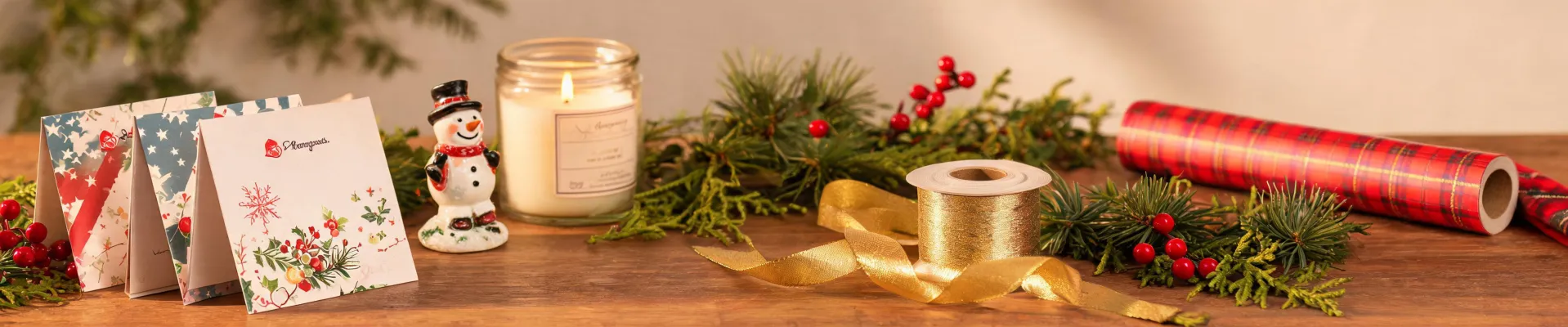
In March 2023, I signed off on a $4,747 order for an event client doing a wedding showcase. Each box looked straightforward on paper: a candle in a glass jar, one American Greetings ornament in a "crystal" style, and one American Greetings wedding card with a handwritten note from the venue director. Five weeks of lead time. No rush shipping. Everything arrived on schedule.
We still ended up with 14 cracked ornaments, 30 unusable wedding cards, and a broken candle jar in front of the client's event team.
The broken jar was my fault. To be fair, so were the first two problems.
I've handled American Greetings product orders for a gifting operation since 2018. By now, I've placed close to 200 purchase orders for greeting cards, ornaments, candles, holders, and the boxes that hold them. My experience is mostly mid-range corporate and event gifting. If you package for luxury retail or museum shops, your tolerance for damage and your production standards will look different. That said, the mistakes I made have a way of traveling across categories.
The "crystal ornament" problem wasn't the ornament
The item that caught my eye was listed as a crystal ornament. To me, that name suggested something solid, premium, and presentable. What I didn't do was think about how it would behave inside a gift box.
Most tree ornaments aren't designed to be loose components in a box. They're designed to hang from a branch. The hook, the thin glass, and the decorative coating have to survive a gentle seasonal cycle, not a journey through a packing table, tissue paper, and a satin ribbon.
We unpacked the American Greetings ornaments and started assembling boxes. The first few looked perfect. Then one slipped out of my hand and hit the table edge. That was not a shock. The deeper problem showed up later: when the ornaments shifted inside the finished boxes, the hooks pressed against the glass. Hairline fractures. Scratches. Fourteen ruined pieces total.
I could blame the product, but I won't. The product never claimed to be shatterproof. I assumed "crystal" meant something it didn't. In my experience, the word crystal in decorative product names usually describes a glass-like finish. It doesn't mean impact-resistant. The fix wasn't a different ornament. The fix was a real packing test before buying 300 units.
American Greetings wedding cards and the writing surface trap
The wedding cards in that order were beautiful. That was the problem.
We chose a style with a smooth, slightly glossy interior finish. It photographed beautifully and felt expensive. But each card was supposed to carry a short handwritten message from the venue director. She planned to write 300 of them.
About thirty cards in, she noticed the ink wasn't drying evenly. On the glossy surface, the gel pen left skipped patches. Worse, once the cards were stacked, the ink smudged. We pulled 30 cards from the assembly line and started over with a different pen. If I'd tested one card with the actual pen on day one, we'd have caught it in two minutes.
This is not a criticism of American Greetings wedding cards. A card designed for a quick signature might be perfect for one use and wrong for another. The mistake was treating "wedding card" as a single category instead of asking how the surface would interact with our writing tools.
Not every greeting card interior is the same. Some have coated finishes that reject ballpoint ink. Some take marker beautifully but smear with gel ink. The only reliable way to know is to write on the actual sample before you order hundreds.
How to clean a candle jar to reuse: I gave the wrong advice first
The candle jar incident happened after the event. The client had burned through a batch of candles during the showcase and wanted to repurpose the glass jars as small vases for future tables. They asked me to show their team how to clean a candle jar to reuse it safely.
I said yes. Then I filled one with hot water from the tap.
Within seconds, the jar cracked. Not a dramatic explosion. Just a quiet, unmistakable split running up the side of the glass. The client's team was polite about it, but I could see the look on their faces: this was the person who was supposed to know better.
Here's what I know now: hot or boiling water is the wrong approach for a cool glass jar. Glass expands unevenly when one part heats quickly, and that stress can cause cracking. Plus, hot water makes the leftover wax messier, not easier to remove.
The method that actually works is almost too simple:
- Freeze the candle jar overnight. As the wax hardens and contracts, it pulls away from the glass.
- Use a butter knife or spoon handle to pop the wax disc out. It usually comes out in one piece.
- Wash the jar with warm, soapy water to remove the oily residue. Warm, not boiling.
- Dry it thoroughly before adding a label or lid.
That process has saved every jar I've tested since. It's gentler on the glass, on the labels, and on the person doing the cleaning.
What those mistakes actually cost
The visible damage from that one order added up quickly: 14 cracked ornaments at $9.50 each came to $133. Thirty discarded wedding cards at about $2.80 each was another $84. Replacement shipping cost $57. But those numbers hide the bigger cost: the hours spent redoing work, the interruption to the assembly line, and the quiet confidence the client lost in us.
I still kick myself for the candle jar demo. It wasn't a catastrophic loss. The jar itself cost maybe $6. But it turned a simple educational moment into a reason for the client to doubt our judgment. Trust is harder to replace than glass.
On the plus side, the experience changed how I plan every American Greetings order now.
The checklist I wish I'd had in 2023
Before I sign a bulk order for ornaments, wedding cards, or candle gifts, I run through four steps:
First, I order a physical sample. A catalog photo is not enough. Second, I test the sample inside the actual packaging we plan to use. If it falls from table height, does it survive? If not, I need a better insert or a different product. Third, I test the actual pen on the actual writing surface of the card. If ink smears or skips, I change the pen or the card. Fourth, for candle jars, I store the cleaning instructions before I offer advice. The freezer method is now my default answer.
None of this is complicated. That's what bothers me most. A sample order, a five-minute drop test, and one handwritten sentence would have saved me hundreds of dollars and a very awkward afternoon. The products weren't the enemy. My assumptions were.

Elise Laurent
Elise Laurent is a crystal and decorative glass quality analyst covering crystal figurines, vases, ornaments, suncatchers, and gift glassware. She examines ISO 6486-1 where food-contact glass dinnerware applies, then uses polarized strain inspection, dimensional checks, surface-defect grading, and refractive clarity to compare decorative pieces outside that scope. Her work helps sourcing teams choose materials, finishing routes, and protective packaging without confusing visual brilliance with verified durability.