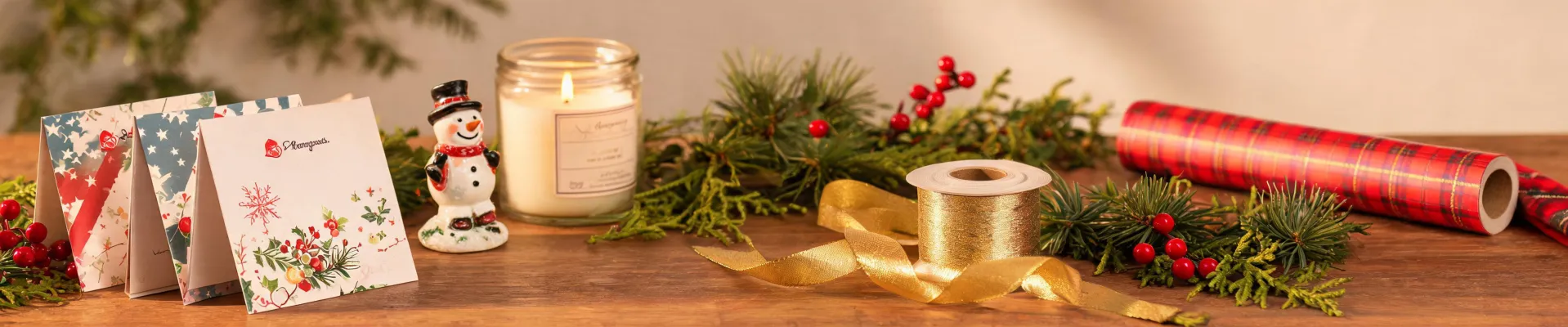
The call came in at 3:47 PM on a Thursday. The kind of call that makes you put down your coffee and start taking notes fast.
"Can you get 350 gift packages done by Monday morning?"
The client was a regional bank preparing for a branch expansion event. They needed corporate gift bags for 350 guests: American Greetings gift bags, custom greeting cards with their logo, and crystal ornaments as the actual gift. The original vendor had fallen through — a whole order stuck in customs, no way around it.
Normal turnaround for this? About two weeks. We had roughly 88 hours, including a weekend.
Here's how it went, what went wrong, and what I'd do differently.
The Order That Shouldn't Have Been Possible
Let me break down what the client actually needed:
- American Greetings gift bags (14" x 14" standard size, 350 units)
- American Greetings greeting cards with custom logo print and a personal thank-you message from the bank's VP
- Crystal ornaments — they'd chosen a teardrop design that matched their brand aesthetic
- Crystal gift boxes with foam inserts and ribbon
- Assembly — each bag needed tissue paper, the crystal gift box, the greeting card, and a small branded pen
The crystal ornaments were the big concern. Crystal gift items need custom packaging, and shipping crystal anything is always a risk. I've handled enough rush orders to know the drill: you don't just need the product — you need the product to arrive intact.
Where It Started to Fall Apart
The ornaments arrived on Saturday morning. We'd paid for expedited shipping and the vendor delivered on time. But when we opened the boxes, nine of the 350 crystal ornaments were cracked.
Nine. That doesn't sound like a lot. But when you need 350 complete gift bags by Monday at 9 AM, nine damaged items might as well be 350.
I had two hours to make a decision. Normally I'd get multiple quotes and compare options carefully, but there was no time. Here's what I was weighing:
- Option A: Source replacements locally. But it was the weekend, and crystal ornaments aren't exactly a convenience store item.
- Option B: Explain the situation to the client and ask if they'd accept a smaller order.
- Option C: Get creative with what we had on hand.
Looking back, I should have asked the vendor about their packaging process before ordering. At the time, I assumed crystal gift items would be shipped with adequate protection. That was my mistake — I didn't verify, and nine cracks in the inventory were the result.
In hindsight, I should have pushed for a 5-10% overage from the start. Every seasoned buyer knows this. I know this. But when the budget was already stretched, I skipped the extra units to save the client money. It's the kind of cost-saving decision that looks good on paper until something breaks.
The Paper Question That Saved the Day
While I was stressing over the cracked ornaments, one of the client's team members asked me something unexpected:
"What kind of paper is used for scrapbooking?"
At first I thought she was changing the subject. She wasn't. Her idea: use scrapbooking-style cardstock to create decorative inserts for the gift bags — something that would make the bank's logo feel more personal than a standard printed card. She had a point. The American Greetings greeting cards were already printed and looked great, but they felt a little generic. A custom insert with more texture would elevate the whole package.
The answer to her question: scrapbooking paper is mainly cardstock, typically in the 65 lb to 110 lb range. It's thick enough to hold its shape in a scrapbook page but still printable with the right printer. The standard size is 12" x 12", though 8.5" x 11" also works. Patterned paper (60-80 lb) is used for decorative layers, and vellum adds a translucent overlay effect.
For our purpose — custom inserts for gift bags — heavyweight cardstock in the 80-100 lb range was ideal. It needed to hold a clean fold, stand up in the bag, and feel substantial when someone pulled it out.
We had some 12" x 12" cardstock in the shop, leftover from a DIY event we'd hosted in June 2024. It wasn't the exact shade of navy blue the bank wanted, but it was close enough that with the logo printed in gold, the slight difference would look deliberate.
The Fix, Piece by Piece
Here's what we did, in chronological order:
1. Sourced replacement crystal gifts — Saturday, 4:30 PM
A local gift shop had a small collection of crystal ornaments. Not the same teardrop design, but they had 12 round ones that matched the bank's logo shape. We bought all 12 to cover the nine damaged pieces plus three as buffer.
Cost: $186 total. The original ornaments were $7.50 per unit; these were $15.50 each. A painful premium, but the alternative — showing up 12 bags short — was worse.
2. Printed custom inserts — Saturday evening
We cut the 100 lb cardstock down to 5" x 7" (a standard A7 size) and ran it through our laser printer. The bank's logo in gold foil would have been ideal, but there's no time for foil stamping on a weekend. Instead, I dug out some gold metallic printable paper we'd used for a wedding order back in 2023. We printed the logo and a short thank-you message on that, then mounted the gold pieces onto the navy cardstock with double-sided tape.
The result honestly looked better than the original plan. The mix of textures — smooth cardstock, metallic logo, the physical weight of the insert — felt genuinely premium.
3. Reassembled the gift bags
Each American Greetings gift bag got:
- Two sheets of white tissue paper, crinkled rather than folded
- One crystal gift box with foam insert
- One crystal ornament inside the box, wrapped in a small organza pouch
- The custom cardstock insert with the gold logo
- The pre-printed American Greetings greeting card
- One branded pen in the front pocket
4. Did a 100% inspection
I couldn't afford another surprise. We laid out all 350 bags on tables and physically checked every single one. That sounds tedious, and it was — it took two hours with three people. But we caught two things: one ornament had a hairline crack we missed initially, and three inserts were printed slightly off-center. All fixed before delivery.
The Delivery
We delivered Monday at 7:15 AM. The event started at 9. The bank's team checked a random sample of 20 bags, then gave us the thumbs-up.
The VP sent a thank-you note afterward. She mentioned that several guests specifically commented on the gold-printed inserts — they didn't realize the bank had put that much thought into a gift bag. The crystal gifts themselves were a hit, and the round ones from the local shop actually got more compliments than the original teardrop design.
What This Taught Me
I've handled more than 200 rush orders over the past four years, and this is the lesson I keep coming back to:
Backup materials are not optional. The scrapbooking cardstock wasn't "extra inventory" to me before this job. It was leftover craft supplies. It turned out to be the thing that made 350 gift bags memorable.
Verify packaging claims. I didn't ask the crystal vendor how they packed their ornaments for shipping. A five-minute conversation could have prevented the whole cracked-ornament crisis.
When in doubt, overage. Ordering 5-10% more than you need isn't waste — it's insurance.
Paper matters more than you think. Whether you're scrapbooking at home or designing custom gift bag inserts, the paper weight and finish completely change how the final piece feels. For inserts like ours, 80-100 lb cardstock is the right call. For scrapbooking pages, the 65-110 lb range covers most needs.
Is This Actually Efficient?
Here's where someone might argue with me: we used a lot of manual workarounds in this order. We sourced locally, we printed in-house, we assembled by hand. That doesn't sound like "efficiency."
But here's the thing — efficiency doesn't mean automating everything. It means getting the outcome the client needs within the time you have. If we'd had an automated assembly line, we might have gotten this done faster. We didn't. What we had was a clear process, solid material knowledge, and the willingness to do physical work when the clock was running.
The genuinely efficient part was how we managed information. We tracked every item in a shared spreadsheet — ordered, received, inspected, damaged, replaced, assembled. Real-time updates, no emails, no "let me check with the team." When I needed to know whether the crystal gifts had arrived, I checked the sheet. That system is why we could make a two-hour decision about the cracked ornaments without calling three meetings to discuss it. The data was already there.
If You're Planning Corporate Gifts
If you're thinking about ordering American Greetings gift bags, greeting cards, or crystal gifts for an event, here's my advice:
- Start with the longest lead-time item. For most corporate gift packages, that's the crystal gift or anything custom-printed. Gift bags and greeting cards are faster to source.
- Ask about packaging before you order crystal items. Specifically: "How do you pack your ornaments for shipping?" and "What happens if items arrive damaged?" If the answers are vague, add extra units to your order.
- Budget for rush costs. As of early 2025, rush printing premiums are running roughly 25-50% over standard pricing for 2-3 day turnarounds, and 50-100% for next-day. That's based on quotes I've collected from major online printers. It stings, but it's still cheaper than explaining to a client why 350 guests didn't get a gift.
- Test your paper before you print. If you're using cardstock for inserts, print one sample first. Different printers handle heavy paper differently, and cardstock that has been sitting in humid storage will behave worse than fresh sheets.
Bottom Line
Honestly, I'm not sure why some vendors consistently beat their quoted timelines while others miss every single time. My best guess is it comes down to internal processes — the ones with built-in buffer time rarely disappoint.
What I do know: a corporate gifting emergency is survivable if you have material knowledge, a backup plan, and the willingness to get your hands dirty.
The cardstock that saved this order is the same paper scrappers use for layouts. The American Greetings gift bags came in consistent sizes, which made assembly planning straightforward. The greeting cards did their job. And the crystal gifts — fragile, beautiful, absolutely worth the hassle — were the centerpiece that made 350 guests feel genuinely appreciated.
Not bad for 72 hours of work.

Elise Laurent
Elise Laurent is a crystal and decorative glass quality analyst covering crystal figurines, vases, ornaments, suncatchers, and gift glassware. She examines ISO 6486-1 where food-contact glass dinnerware applies, then uses polarized strain inspection, dimensional checks, surface-defect grading, and refractive clarity to compare decorative pieces outside that scope. Her work helps sourcing teams choose materials, finishing routes, and protective packaging without confusing visual brilliance with verified durability.